
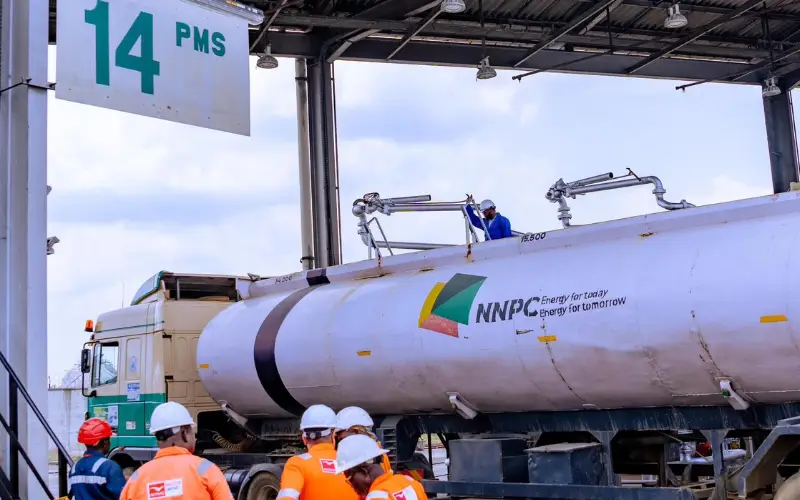
Nigeria’s Port Harcourt Refinery will temporarily halt operations from May 24, 2025, as part of a planned maintenance and sustainability assessment, the Nigerian National Petroleum Company Limited (NNPCL) announced on Friday.
The move, according to the company, aims to ensure long-term operational efficiency and uphold energy supply reliability in Africa’s largest oil-producing nation.
“This is not a shutdown due to failure,” said Olufemi Soneye, NNPCL’s Chief Corporate Communications Officer. “the refinery has been working for a year. This is routine maintenance and a sustainability test.”
The announcement comes just months after the refinery resumed operations in December 2024, marking a milestone in Nigeria’s push to end fuel import dependence. Truck loading of petroleum products began on November 26, 2024, according to official statements.
Stakeholder-Backed Process
NNPCL said it is working closely with the Nigerian Midstream and Downstream Petroleum Regulatory Authority (NMDPRA) and other stakeholders to carry out the maintenance efficiently and transparently.


“Further updates will be provided regularly through our website and public channels,” Soneye said.
The Port Harcourt Refinery comprises two processing units—a 60,000 barrels-per-day (bpd) old plant and a 150,000 bpd newer facility, bringing its total refining capacity to 210,000 bpd.
Revival Timeline
Shut down in March 2019 for comprehensive repairs, the facility underwent a $1.5 billion government-backed rehabilitation program led by Italian engineering firm Maire Tecnimont. Oil major Eni served as technical adviser.
Mechanical completion was declared on December 21, 2023, followed by flare start-up—signaling a return to functional status.
Strategic Implications
The temporary closure is unlikely to trigger immediate fuel supply disruptions, given its routine nature. However, it underscores the fragile state of Nigeria’s refining sector, which remains under pressure to meet local demand and reduce costly imports.
Read also: How NNPC, Adelabu’s Lack of Transparency Hurt Nigeria’s Oil and Power Sector