
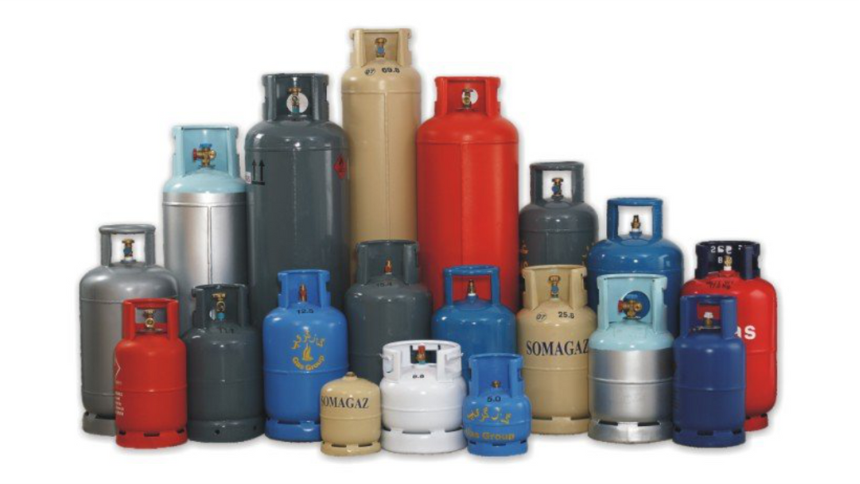
Nigerian households faced fresh pressure on their budgets in April as the average price of cooking gas jumped 7.69% month-on-month, despite a marginal easing in the country’s overall inflation rate.
According to the National Bureau of Statistics (NBS), the cost of refilling a 5kg Liquefied Petroleum Gas (LPG) cylinder rose from ₦7,322.49 in March to ₦7,885.60 in April 2025. The surge follows a sustained trend of energy price increases across the country and has sparked fresh concerns about the cost of living for many low-income families.
“This increase is significant for households already reeling from economic hardship,” said Lagos-based economist Tunde Adebayo. “Energy prices have a ripple effect on food and transport costs.”
The price for a 12.5kg cylinder saw an even sharper rise, up by 9.82% from ₦18,456.24 in March to ₦20,268.06 in April. On a year-on-year basis, the increases were more striking: 5kg cylinder prices climbed 20.92% from ₦6,521.58 in April 2024, while 12.5kg cylinders soared by 29.61% from ₦15,637.74.
South-South, South-East hit hardest
Regional data painted a stark picture of disparities across the country. The South-South zone recorded the highest average price for a 5kg refill at ₦8,447.78, while the North-Central posted the lowest at ₦7,432.22.


At the state level, Rivers led with the highest 5kg refill price at ₦9,103.82, followed by Ebonyi (₦8,867.24) and Akwa Ibom (₦8,655.59). Niger State recorded the lowest at ₦7,006.15.
For the larger 12.5kg cylinder, Imo State ranked highest at ₦22,938.73, closely trailed by Delta (₦22,831.70) and Rivers (₦22,759.56). Kebbi, meanwhile, offered some relief with the lowest price at ₦18,080.27.
March prices already set the stage
Even before April’s spike, cooking gas prices were already trending upward. In March, Sokoto recorded the highest 5kg cylinder price at ₦8,157.38, with Rivers and Taraba not far behind. The South-South zone also topped March’s regional price chart at ₦7,598.13, reinforcing the trend of consistent regional disparities.
Prices for 12.5kg cylinders in March reflected a similar pattern. Rivers topped at ₦20,964.79, while Cross River and Akwa Ibom followed closely. Nasarawa had the lowest average price at ₦15,661.30.
Inflation slows, but consumer relief elusive
The upward trend in cooking gas prices comes even as Nigeria’s headline inflation rate eased slightly. The NBS reported a decline from 24.23% in March to 23.71% in April, a 0.52 percentage point drop.
Month-on-month inflation also slowed significantly to 1.86% in April, compared to 3.90% in March. Analysts say this could signal a moderation in price growth, though the benefits may take time to reach consumers.
“While headline inflation is softening, core essentials like energy and food continue to climb,” Adebayo added. “That’s where Nigerians feel the most pain.”
Policy disconnect?
The rising cost of LPG could challenge ongoing government efforts to promote cleaner energy alternatives and reduce reliance on firewood and kerosene. Nigeria, Africa’s largest oil producer, has struggled to insulate its domestic market from global price volatility and infrastructure bottlenecks.
As the NBS data shows, the pain is unevenly felt. While some regions experience minor relief, others are shouldering a disproportionately high burden. Until broader energy policies take root, cooking gas will remain a luxury for many.
Read also: How Policies Are Driving Oil And Gas Investment In Nigeria