
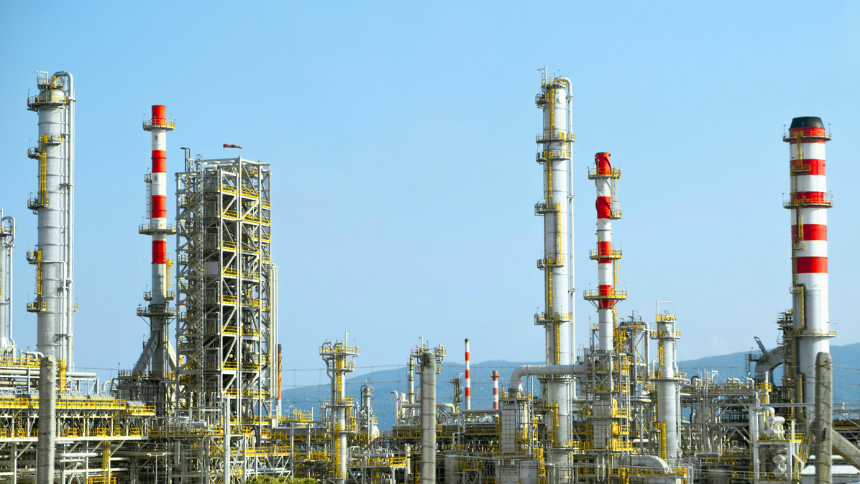
Africa is on the cusp of a transformative shift in energy security, with Nigeria and Angola emerging as the continent’s new refining powerhouses.
According to the Africa Finance Corporation (AFC), the continent’s refining capacity is projected to meet 90% of fuel demand by 2024, up from 45% in 2024. This signals a reduction in dependency on imported petroleum products.
The forecast is outlined in the newly released State of Africa’s Infrastructure Report 2025, which highlights that “if fully utilised, refining capacity could meet up to 90% of the continent’s fuel demand.” This shift will help reduce Africa’s import reliance, which stood at 55% in 2023, to potentially just 10% within the next few years.
Central to this transformation is the 650,000 barrels-per-day Dangote Refinery in Nigeria, Africa’s largest and most advanced facility. Commissioned in May 2023, the refinery has become the cornerstone of Africa’s refining renaissance. President Bola Ahmed Tinubu praised it as a “great phenomenon of our time,” describing it as proof of Nigeria’s industrial potential and economic resurgence.
$16 billion needed for refinery upgrades and future investments
To fully harness this opportunity, the AFC emphasised a dual-track investment strategy. First, over $16 billion is required to upgrade brownfield refineries, such as Nigeria’s Port Harcourt and Warri facilities, ensuring they meet modern fuel standards and operate efficiently. These upgrades are critical in cutting Africa’s dependency on fuel imports.


Secondly, greenfield investments in new refinery projects must meet future demand. Nigeria and Angola are highlighted as emerging continental hubs, not only due to their vast hydrocarbon reserves but also for their growing commitment to infrastructure expansion and clean energy alignment.
“These two tracks are complementary,” AFC noted. “Modernising existing assets while building new resilient infrastructure is key to sustainable energy security.” Angola’s increasing private sector involvement and Nigeria’s public-private partnerships are expected to accelerate the pace of development.
Infrastructure bottlenecks, distribution, and policy coordination remain critical
Despite the optimistic outlook, the path to energy independence is challenging. The AFC points out that inadequate infrastructure remains a critical obstacle, especially in transportation and distribution networks. Efficient pipeline systems, expanded railway links, and diversified port logistics are vital for swiftly and cost-effectively moving refined products across borders.
There is also a need for policy coordination among African countries to harmonise fuel quality standards, attract investment, and ensure cross-border energy trade. “Africa must prioritise refinery upgrades, build resilient infrastructure, and adopt policies that support the long-term energy transition,” the AFC stated.
Read more on Iran’s Crude Exports to China Dip on Stricter Sanctions, Refinery Maintenance