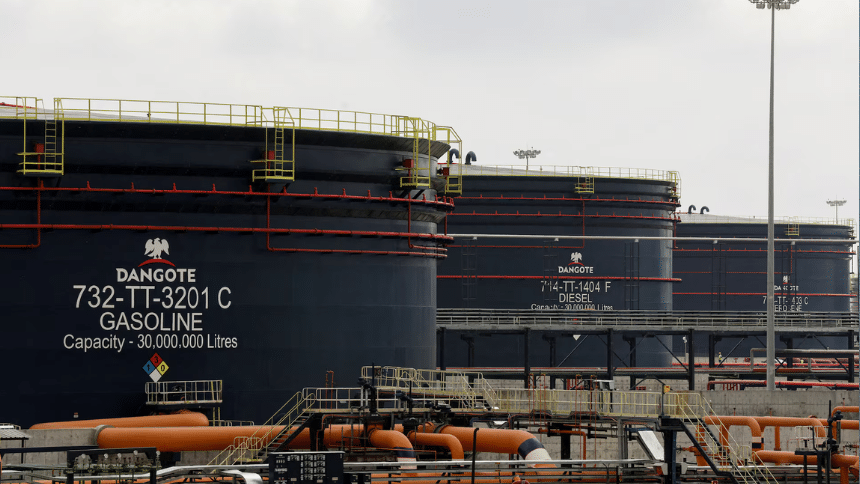
Nigeria’s Dangote Petroleum Refinery has cut the price of petrol again, lowering its ex-depot rate from ₦828 to ₦699 per litre, in one of the sharpest reductions seen this year as the company pushes to ease pressure on consumers and stabilise a volatile fuel market.
Real-time data from Petroleumprice.ng on Friday showed that the new price reflects a ₦129 cut, equal to a 15.58% drop in the benchmark rate for Premium Motor Spirit (PMS). The new price took effect on December 11, marking the 20th petrol price adjustment by the refinery in 2025.
A refinery official, who was not authorised to speak publicly, confirmed the change. “The refinery has reduced petrol gantry price to ₦699 per litre,” he said.
The latest review comes less than a week after refinery chairman Aliko Dangote repeated his promise to keep domestic fuel prices “reasonable and competitive,” even as global oil markets remain unstable and smuggling continues across Nigeria’s borders.
After a closed-door meeting with President Bola Tinubu on December 6, Dangote said petrol prices would continue to fall as output rises and the refinery competes with imported products.


“Prices are going down,” he said. “We must also compete with imports. Smuggling has reduced, but not totally. There is still quite a lot of smuggling because the price in Nigeria is about 55% lower than in neighbouring countries.”
He added that both petrol and diesel would “continue to be sold at a very reasonable price,” noting that his $20 billion refinery was built as a long-term investment. “We are not here to make our money back quickly,” he said.
Market watchers say the refinery’s decision has already triggered new cuts across private depots. Data from Petroleumprice.ng shows several operators adjusting their ex-depot prices in response.
Sigmund Depot reduced its price by ₦4 to ₦824 per litre, while Bulk Strategic cut by ₦3. TechnoOil implemented one of the steepest changes with a ₦15 reduction.
Other major depots – including A.A. Rano, NIPCO and Aiteo, were also recorded trimming their rates.
Analysts say the move may bring short-term relief to transport operators, businesses and households struggling with rising living costs. But they warn that sustained price stability will depend on how fast the refinery reaches full capacity and how effectively authorities curb fuel smuggling.
For many Nigerians, the continued reductions offer hope in a year marked by inflation, high transport fares and pressure on household income.
Read also: Dangote Refinery to supply 1.5bn litres of petrol monthly from December