
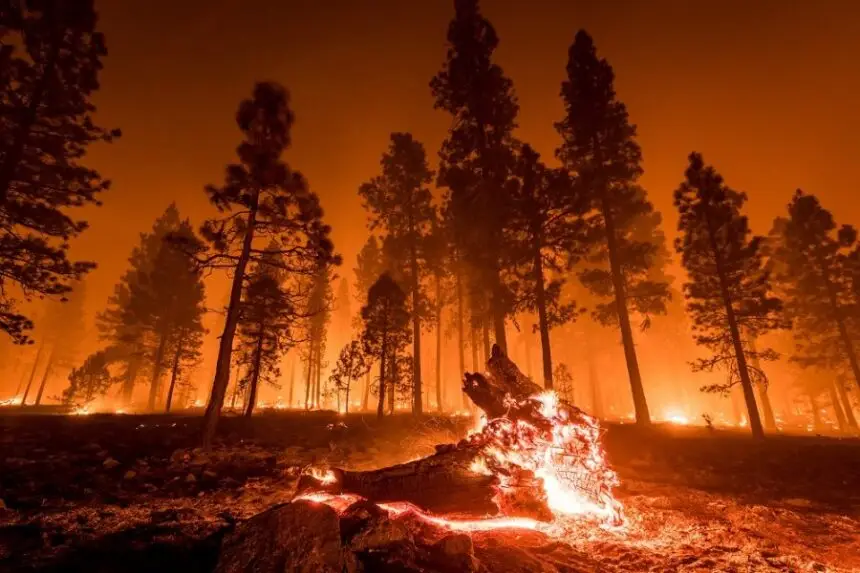
Canada’s Alberta wildfire season has begun with intensity, as a large blaze near the town of Swan Hills has triggered evacuations and led to temporary shutdowns in oil operations.
The wildfire, currently out of control and covering approximately 1,600 hectares, is located just 7 kilometres from Swan Hills, prompting the evacuation of around 1,200 residents on Monday night.
Aspenleaf Energy, which operates in the affected region, has suspended production of about 4,000 barrels of oil equivalent per day and safely removed its field personnel. CEO Bryan Gould stated that the fire was roughly 10 kilometres from the company’s assets as of Monday evening. Canadian Natural Resources, the country’s largest oil producer, also has operations in the vicinity but has yet to issue a public statement regarding the incident.
Wildfires are a recurring challenge in Alberta, particularly during the spring. The province, known as Canada’s oil hub, regularly faces such disasters. In 2023, Alberta experienced significant wildfire activity, leading to evacuations and halting over 319,000 barrels of oil equivalent per day across more than 100 active fires. The devastating Fort McMurray fire in 2016 saw 90,000 people displaced and a production loss of 1 million barrels per day.
The threat is not limited to Swan Hills. A separate wildfire, spanning roughly 390 hectares, is also burning uncontrollably in Yellowhead County. Currently, Alberta is contending with 47 active wildfires, two of which are classified as out of control, once again highlighting the province’s delicate balance between public safety and energy supply.


Oil sands production in Alberta has surged by 1.3 million barrels per day over the past ten years, now reaching 3.3 million bpd and expected to grow to 3.8 million bpd by 2030. However, this expansion in infrastructure increases the region’s exposure to wildfire-related disruptions.
This year’s early and severe wildfire activity underscores a growing concern: as wildfires in Canada become more intense and frequent due to climate change, the country’s oil-producing regions remain highly vulnerable, not only to market dynamics but also to the escalating risks posed by an increasingly unstable climate.