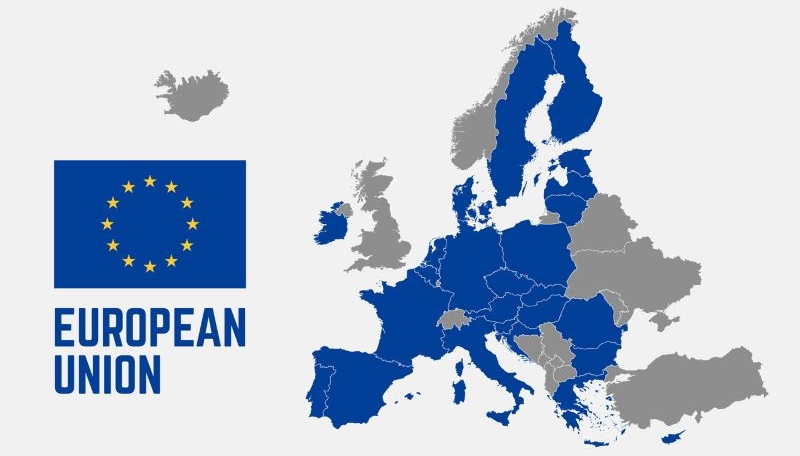
Europe remains an attractive destination for professionals seeking international work opportunities, and several EU countries are offering low-cost visa options for 2026. While application fees in some nations have increased, others continue to provide affordable and accessible routes for skilled and remote workers.
Below are eight EU member states — including Germany, Spain, and Poland — that are among the most affordable countries for obtaining work visas in 2026. The report outlines the costs and target professionals for each visa type, providing guidance for workers planning to move to Europe next year.
Germany: Skilled Worker Visa and EU Blue Card
Germany remains a key entry point for skilled professionals in Europe. The Skilled Worker Visa and EU Blue Card each cost €75 and €37.50 for minors under 18. They are valid for one year, with the option to renew. The fee is payable in cash in NGN at the current exchange rate of the Consulate or via POS. Applications of persons who are married to a German or EU-citizen are free of charge.
These visas are meant for engineers, healthcare workers, and IT specialists. The country continues to attract workers in sectors facing shortages, providing routes to longer-term residence and employment.


Spain: Digital Nomad Visa for Remote Workers
Spain’s Digital Nomad Visa costs €80 to €190 for the visa application, depending on nationality, plus a fee of €16.08 for the residency card (TIE).
It targets remote professionals, freelancers, and digital specialists seeking to work legally while residing in the country. The visa further allows holders to establish themselves in Spain’s growing remote work community.
Luxembourg: Long-Term EU Blue Card
Luxembourg’s EU Blue Card costs €80 and is valid for up to 96 months. The visa supports professionals in technology, finance, and healthcare. It is suitable for those looking for longer residence options within the European Union’s work framework.
Poland: D-Type National Work Visa
Poland offers a D-Type National Work Visa for €135, valid for one year. The visa is open to professionals in sectors such as agriculture, tourism, and information technology. It serves as an affordable option for first-time workers entering the European labor market.
Austria: Red-White-Red Card
Austria’s Red-White-Red Card costs €160 and allows foreign professionals to live and work in the country for 24 months. The visa is tailored for skilled workers, particularly in engineering and healthcare. It provides a structured process for employment-based migration.
Sweden: General Work Permit
Sweden’s General Work Permit, priced at €182, has a validity of up to two years. It applies to workers in research, engineering, and IT sectors. The visa provides an entry route for applicants seeking roles in Sweden’s innovation-driven industries.
France
The regular fee for a France long-stay work visa is €99. This is the application fee and is non-refundable, even if your visa is refused. Some types of long-stay work visas cost different amounts — for example, the Visa de long séjour valant titre de séjour (VLS-TS) costs €250, but students and interns pay a reduced fee of €60.
Netherlands: Highly Skilled Migrant Visa
If you want to live in the Netherlands as a highly skilled migrant, you need a provisional residence permit (MVV) and/or a residence permit.
The fee for a Netherlands highly skilled migrant visa is €350, and it is paid by the employer, according to the IND. This amount covers both the MVV (provisional residence permit) and the residence permit, which are usually applied for together. For paper applications, the IND charges a €350 direct debit fee.
Professionals seeking affordability in 2026 may find Germany and Spain to be the most cost-effective options. The choice of visa depends largely on the applicant’s field and work objectives in Europe.