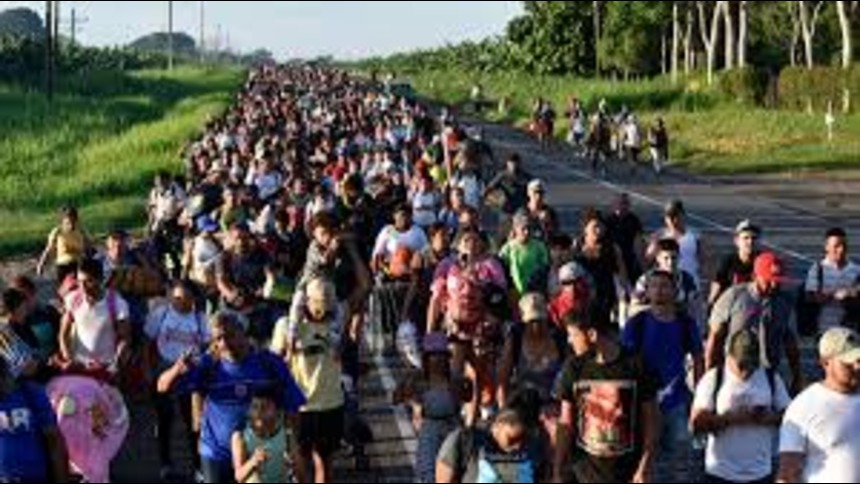
The United States government has launched a new program that offers $1,000 and paid travel to undocumented migrants who voluntarily agree to leave the country. This follows the effort to reduce the number of people living in the US without legal status.
According to BBC News, the program was announced by Homeland Security Secretary Kristi Noem, who described it as the “best, safest and most cost-effective” option for those seeking to avoid arrest and deportation. The Department of Homeland Security (DHS) stated that migrants who take up the offer will not be prioritised for detention.
Details of the Voluntary Departure Program
The initiative allows eligible individuals to receive financial assistance and transportation to their home countries. The first person to accept the offer reportedly flew from Chicago to Honduras, according to DHS officials.
The program is administered through the CBP One app, which allows migrants to confirm their departure and record their return home. Officials said the approach reduces the cost of deportations, which they estimate at more than $17,000 per person when including arrest, detention, and removal expenses.


This gives people an alternative that is less expensive for taxpayers and allows individuals to leave on their own terms.
Officials also referred to the program as a “dignified” way for migrants to return home.
Trump Comments on Possible Return Pathways
President Donald Trump, who returned to office in January, linked the program to broader immigration policy goals. Speaking to reporters on the day of the announcement, he suggested that some of those who leave voluntarily could be allowed to return legally in the future.
“We’re going to work with them so that maybe someday, with a little work, they can come back in if they’re good people, if they’re the kind of people that we want in our country,” Trump said.
He also said the decision to leave voluntarily would not guarantee a future visa, but that the administration would consider legal reentry options in select cases.
Support and Criticism of the Initiative
Supporters of the policy highlight the drop in illegal crossings and the rise in enforcement activity since Trump took office. Border Patrol reported just over 7,000 arrests at the US-Mexico border in March—one of the lowest monthly totals in recent history.
The White House has also pointed to an increase in detentions by Immigration and Customs Enforcement (ICE) as evidence of stronger internal enforcement.
However, the program has drawn criticism from some lawmakers and advocacy groups. Democratic congressman Adriano Espaillat posted on X (formerly Twitter),
“We don’t bribe people to leave. We build a country where everyone belongs.”
Critics have also raised concerns about the tone and implications of paying people to depart, suggesting it reflects a broader strategy to reduce legal and illegal immigration through coercive measures.
Legal and Policy Challenges Continue
The administration has encountered legal obstacles in implementing parts of its immigration agenda. Courts have blocked efforts to end birthright citizenship for some children born in the US. Trump has also invoked older laws to enforce immigration rules, a move some analysts have described as legally risky.
Despite these setbacks, the administration continues to promote its record on immigration enforcement during its first 100 days in office. Officials have said that more details on future policies will be released later this year.
The voluntary departure program remains one of the most visible recent efforts, signalling a shift in how the government handles undocumented migrants already in the country.