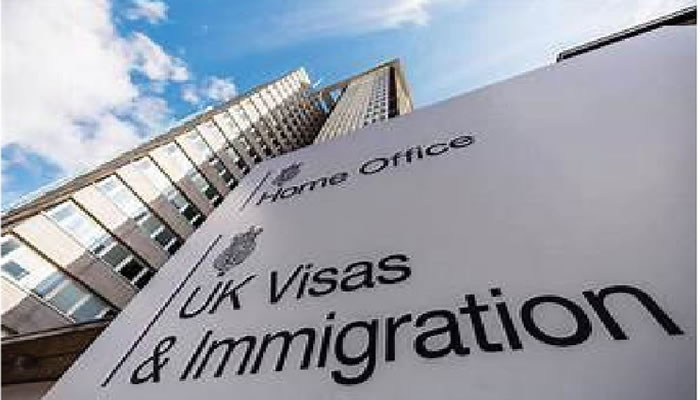
The UK government is considering new visa restrictions for nationals of countries such as Nigeria, Pakistan, and Sri Lanka as part of an effort to reduce immigration and limit abuse of the asylum system.
These measures would make it more difficult for people from these countries to obtain work or study visas.
According to BBC News, UK ministers believe there is a pattern of individuals who legally enter the UK on work or student visas and then switch to claiming asylum. The government views this as a misuse of the immigration system and plans to outline reforms in an upcoming immigration white paper.
Home Office Confirms Crackdown Plans
The Home Office also confirmed that the forthcoming Immigration White Paper would detail a comprehensive plan to reform the immigration system.


A spokesperson for the Home Office stated,
“Our upcoming Immigration White Paper will give a comprehensive plan to restore order to our broken immigration system”
Asylum and Migration Figures Show Rising Trends
Official figures show that 99,790 people claimed asylum in the UK in the year ending September 2024. Of those, 9,560 were from Pakistan — the highest of any nationality — and nearly double the number from the previous year.
The rise in asylum claims has prompted concern within the government about the potential misuse of visas as a route to permanent stay in the UK. However, reports indicate that there are no recent published statistics on visa overstays, as exit checks have not been reported since 2020 due to a review of data accuracy.
Professor Jonathan Portes, a senior academic of the UK in a Changing Europe think tank, told BBC Radio 4, “I think the impact here is not primarily about overall numbers. It’s about reducing asylum claims where the government sees abuse.”
He added, “When someone arrives allegedly as a student and then quickly switches to the asylum route… that is seen as abuse of the system.”
Labour’s Position and Political Pressure
Since taking office, reports cite that Prime Minister Sir Keir Starmer has pledged to reduce both illegal and legal migration but has refused to commit to a specific migration target. He has criticised the previous Conservative government for not reducing migration despite promising to do so.
Labour is also under increased pressure after Reform UK’s strong performance in local elections, where the party won 677 of approximately 1,600 contested seats. Reform has called for a freeze on non-essential immigration while allowing entry for workers in key sectors such as healthcare.
Starmer responded to the election results by saying voters had sent a clear message, and that the government must move “further and faster” on immigration reform and other public services.
Policy Changes and International Student Numbers
Changes to immigration rules introduced under the former Conservative government have already led to a drop in net migration from 906,000 in the year to June 2023 to 728,000 by June 2024. These changes included increasing the minimum salary threshold for skilled workers from £26,200 to £38,700 and banning care workers from bringing dependents.
New restrictions on student visa dependents have also impacted international enrolment. The UK recorded a 16% decrease in international students in the current academic year. Among them, students from Nigeria and Pakistan numbered 34,525 and 45,720, respectively, out of a total of 732,285.
Full details of the new immigration policies are expected later in May when the government publishes its Immigration White Paper.