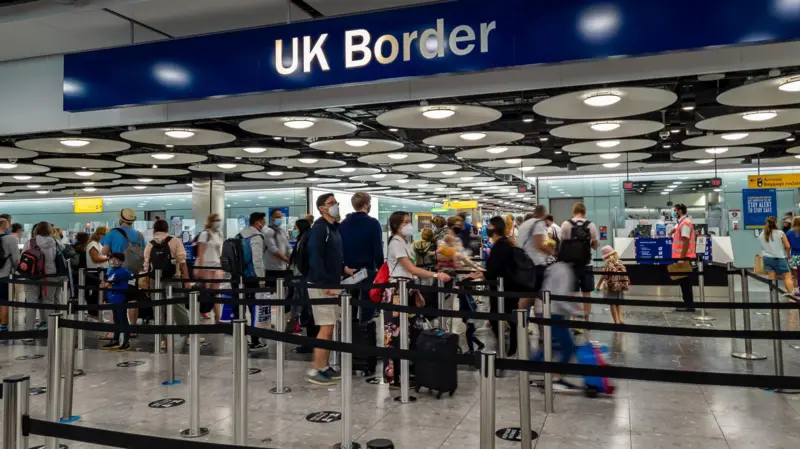
Residents in parts of north-west England are expressing concerns over how asylum seekers are housed, as the UK government moves forward with plans to close all asylum hotels.
Communities in towns like Warrington and Wigan are raising questions about local consultation, housing pressures, and the long-term impact of shifting asylum accommodation to homes of multiple occupation (HMOs).
According to BBC News, hundreds of people have contacted the Your Voice Your BBC News initiative to speak about small boat crossings, illegal immigration, and housing for asylum seekers. The closure of hotels may intensify pressure on HMOs—shared housing often used for lower-cost rentals—raising further tension in affected areas.
Local Protests in Warrington
In Warrington, 240 asylum seekers are currently housed in two hotels. Residents like Mandy, who lives near the Holiday Inn being used for accommodation, have joined weekly peaceful protests calling for its closure.


“I’m angry. My son can’t get a house, but they’re housing these first. It’s not right, this is our country,” Mandy told the BBC.
She said she began protesting because the presence of the hotel made her feel unsafe, adding, “I recently lost my husband and I couldn’t get any help whatsoever.”
Mary, another resident, said she no longer feels safe in her home. “They (asylum seekers) have been standing there in gangs staring into my house… It’s been absolutely awful for me.”
Other locals, however, like Lee, question the protests, saying: “Just by intimidating a load of people in a hotel on the weekend isn’t doing anything, is it?”
Warrington Borough Council said decisions about the use of hotels for asylum seekers are made by the Home Office, not the local authority.
HMO Use Expanding in Wigan
Ten miles north, Wigan has no asylum hotels but a growing number of HMOs—now over 900, many housing asylum seekers. Resident Adrian described concerns over safety, illegal working, and lack of consultation. “They just moved them in at 2 pm one afternoon,” he said. “We were never asked.”
Asylum seekers are generally not allowed to work while their claims are pending.
Reports inform that Wigan Council has since agreed with the Home Office to prevent further expansion of HMOs for asylum accommodation. It says the concentration of such properties can strain resources and affect neighbourhood stability, while acknowledging that HMOs also provide essential low-cost housing for others.
Asylum Seekers Share Experiences
BBC journalists also spoke to two asylum seekers living in an HMO previously occupied by a family. The men, from Iraq and Afghanistan, showed reporters their shared kitchen and basic living quarters. Each receives around £50 per week for expenses, along with utility coverage and access to health services.
“I find it strange that people come to protest,” said the Iraqi Kurd, whose asylum appeal is ongoing.
“Those who come here are people whose lives are in danger.” He said he hopes to contribute to the UK and is against those who break the law. “Anyone who understands the law would not behave like this.”
Housing Pressure and Future Uncertainty
Experts warn of consequences if the government shifts entirely from hotel use to HMOs. Planning consultant, Faraz Baber, warned of rising tensions, stating the move could lead landlords to evict families to secure longer-term asylum contracts.
Josh Nicholson from the Centre for Social Justice said such actions may worsen public frustration and increase community division.
“There’s a risk of turning this into a race to the bottom,” Nicholson said, arguing that deprived areas are disproportionately affected.
In Wigan and Warrington, the demand for social housing remains high. Shelter estimates there are 11,500 households on the social-housing waiting list in Wigan and 7,600 in Warrington.
Government Response and National Debate
The UK government says it inherited an asylum system in disarray, with tens of thousands in hotels awaiting claim decisions. A spokesperson said efforts have doubled the rate of decisions and cut hotel costs by nearly £1 billion over the last financial year.
The Home Secretary, Shabana Mahmood, has prioritised border security and called small boat crossings “utterly unacceptable.”
As political debate continues, the issue remains divisive. Former footballer Barry from Wigan, now in his 70s, told the BBC: “It feels like our country has been taken away.” He wants small boat crossings to stop immediately and fears far-right groups are exploiting public anger.
As asylum hotel closures progress, the question remains: where will people go, and how will local communities cope?