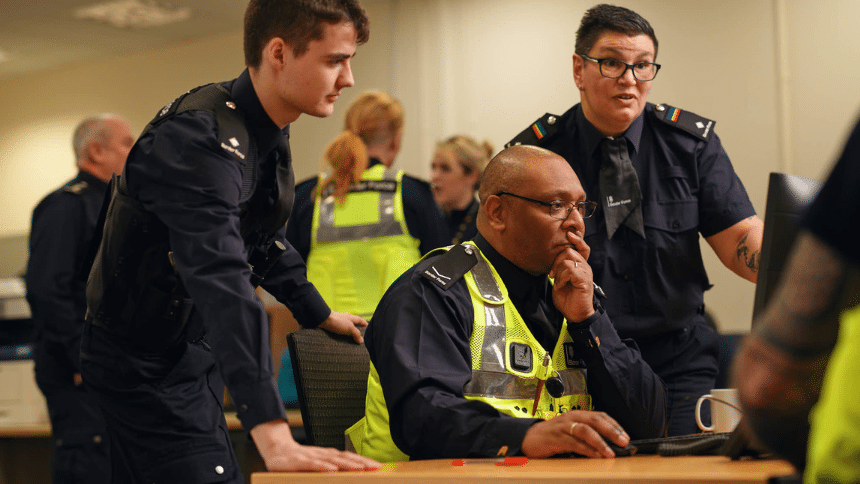
Border officers in the United Kingdom have been granted new legal powers to seize mobile phones from migrants who enter the country illegally, even if no arrest is made, as part of efforts to disrupt people-smuggling gangs operating across the English Channel.
The UK Home Office said the new authority would allow officers to gather intelligence on organised criminal networks that arrange dangerous small-boat crossings.
The powers come into force on Monday and will be used at the Manston migrant processing centre in Kent. Officers at the site can now download data from seized devices using specialist technology, according to the government.
English Channel crossings under tighter enforcement
Officials said the phone seizures are designed to prevent the destruction or concealment of evidence. Border officers may require migrants to remove coats during searches and can check mouths for hidden SIM cards.
The National Crime Agency said data obtained from mobile phones could help identify smuggling organisers, travel routes, and payment methods, and could shorten investigations into people-smuggling gangs.


Border security minister Alex Norris said the government was fulfilling promises to strengthen border enforcement.
“We promised to restore order and control to our borders,” Norris said. “That means taking on the people-smuggling networks behind this deadly trade.”
Safeguards and discretion
Migration and citizenship minister Mike Tapp said seized phones could be returned in some cases, depending on what officers find during checks.
“That’s for the guys on the ground to make that operational decision,” he said in an interview with BBC Radio 4, adding that compassion remained central to enforcement.
“If people have devices that could hold intelligence, then we are right to be able to seize that,” he said.
Refugee groups raise concerns
The Refugee Council urged authorities to apply the new powers carefully. The group said mobile phones are essential for migrants to contact family and access basic information.
It warned that prolonged or unnecessary seizures could increase distress for vulnerable people and called for clear safeguards to ensure fair use of the law.
Tougher offences and political divide
The legislation also introduces new crimes linked to small-boat crossings. Those who store or supply engines for migrant boats could face up to 14 years in prison. Researching routes or equipment for inflatable boats could carry sentences of up to five years.
Martin Hewitt, who leads efforts to reduce crossings, said more than 4,000 actions against smuggling networks have already taken place.
In 2025, 41,472 migrants crossed the Channel, nearly 5,000 more than the previous year.
Shadow home secretary Chris Philp said the measures did not go far enough, arguing that the UK should leave the European Convention on Human Rights — a move the government has ruled out.
Read also: UK lawmakers urge government to create new investor visa as wealthy residents leave