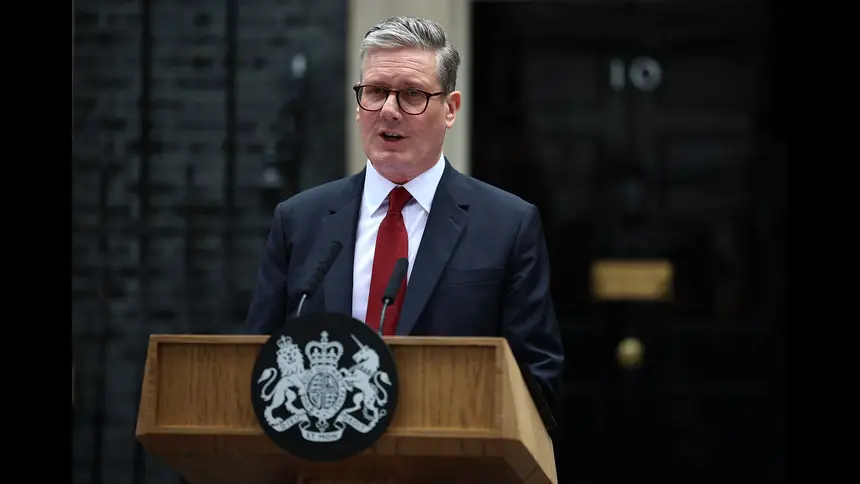
Prime Minister Sir Keir Starmer has said the UK must reconsider how international laws are interpreted by domestic courts, especially in relation to deportations.
He argued that some unsuccessful asylum seekers are avoiding removal from the UK based on the claim that they would face worse prison or healthcare conditions in their home countries.
According to a report by the BBC, Sir Keir made the comments during interviews with Radio 4’s Today programme and BBC Breakfast.
He clarified that his government does not intend to dismantle human rights protections, but believes current interpretations of laws such as Article 3 of the European Convention on Human Rights (ECHR), which prohibits torture and degrading treatment, need reviewing.
Clarifying Deportation Criteria


Sir Keir highlighted concerns that legal provisions are being used to prevent the deportation of individuals who do not meet asylum criteria. He pointed to the case of a Brazilian paedophile who avoided deportation because Brazilian prison conditions were worse than those in the UK.
He said, “There is a big difference between someone facing summary execution and someone being deported to a country with different healthcare or prison standards. We need to look again at the interpretation of some of these provisions.”
The prime minister said courts must apply these laws in the context of current global conditions, including increased levels of migration.
Legal Provisions Under Review
In addition to the ECHR, Sir Keir named other international agreements that may act as barriers to deportation, including the UN Refugee Convention, the Convention Against Torture, and the Convention on the Rights of the Child.
Pressed on which laws were preventing the removal of foreign criminals, Sir Keir cited Articles 3 and 8 of the ECHR. Article 8 concerns the right to private and family life, which can complicate deportation in cases involving family ties in the UK.
The Home Office, under Labour, has already begun reviewing how these laws are applied. Before becoming foreign secretary, Yvette Cooper had instructed officials to examine how courts interpret such provisions. In May, the government’s immigration white paper promised to propose legislation that would “clarify” how human rights laws should apply to immigration cases.
Broader Political Context
The statements follow a Labour Party conference where immigration and party leadership were key topics. Starmer used his keynote speech to position Labour against Reform UK and accused the party of engaging in “the politics of grievance.” He avoided repeating previous criticism of Reform’s deportation proposals as “racist” but said he would oppose racist rhetoric “with everything we have.”
Starmer also addressed internal challenges to his leadership. Greater Manchester Mayor Andy Burnham had recently stated that Labour MPs urged him to return to Westminster. In response, Starmer said, “I’ve been underestimated every time. I pushed through the barriers.”
Other Policy Concerns
Starmer also spoke about youth unemployment and mental health. He said it was “wrong” that many young people are out of work due to mental health issues and questioned whether the benefits system is supporting long-term outcomes.
He also addressed energy prices, stating he is committed to lowering bills for households and businesses, as energy costs are set to rise 2% from Wednesday under Ofgem’s new price cap.
Opposition parties responded critically. Conservative MP Richard Fuller accused Labour of preparing to “whack people with higher taxes” in the upcoming Budget, due in November.