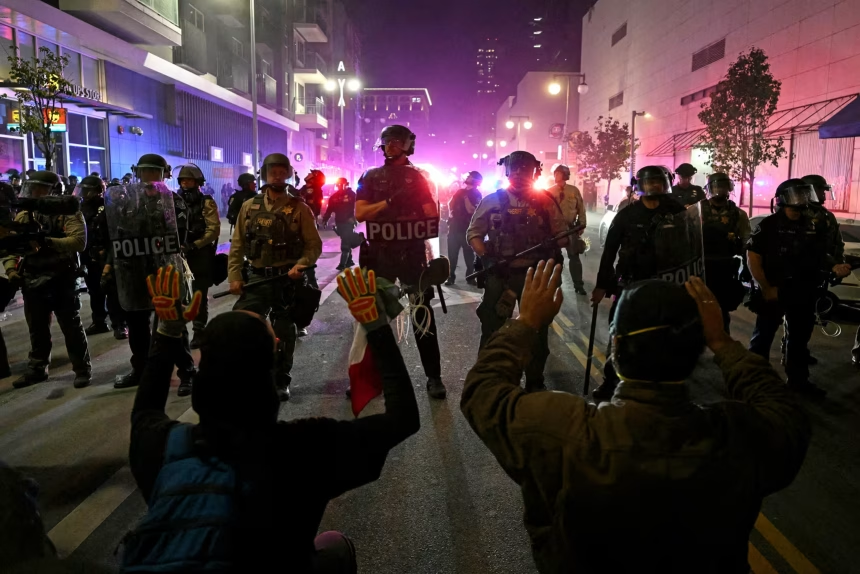
Recent immigration raids by the Trump administration in Los Angeles have led to violent protests over the weekend. In response, the federal government sent 700 US Marines and 4,000 National Guard troops to the area.
The unrest came after a week of ICE raids that led to over 2,000 arrests and growing public criticism.
According to BBC News, tensions grew after large ICE raids in Los Angeles County led to public protests, causing local and state officials to speak out against the federal response and the deportation policies. This event has become a major moment in President Donald Trump’s immigration crackdown.
Federal Immigration Raids and Arrests Increase
NBC News reports that ICE arrested 2,200 individuals on June 4th, a record for a single day. Many of those detained were part of the Alternatives to Detention program, which supervises individuals not considered an immediate threat to public safety.


The White House has expressed dissatisfaction with current deportation numbers. Stephen Miller, the Deputy Chief of Staff and a key figure in immigration policy, stated in May that the administration is pushing to increase daily arrests to 3,000. “President Trump is going to keep pushing to get that number higher every day,” Miller told Fox News.
Tom Homan, the administration’s border policy lead, echoed that message. “We need to increase,” he said. “We expect a fast increase in the number of arrests.”
ICE has also undergone internal changes, with several senior officials departing in recent months. In February, the agency replaced its acting director and other top deportation officers, describing the move as part of a reorganisation to meet the administration’s goals.
Local Officials and Communities React to Raids
According to the BBC, California Governor Gavin Newsom called the federal troop deployment a “deranged fantasy of a dictatorial President” in a post on X.
Protests have erupted in multiple parts of Los Angeles, with demonstrators condemning ICE’s actions as excessive and targeting nonviolent immigrants.
At a rally, Los Angeles City Councilmember Ysabel Jurado criticised a recent raid in the Fashion District. “It was not about public safety, it was a fear-driven, state violence designed to silence, to intimidate, to disappear,” she said.
Some community members expressed support for targeted immigration enforcement. Juan, a naturalised citizen who previously entered the U.S. without authorisation, told the BBC: “ICE agents have a job to do, just like you and I… A crime is a crime.”
Others, like protester Maria Gutierrez from Paramount, said the raids were creating fear in immigrant communities. “This is our city. We’re angry… this isn’t going to scare us,” she said.
Public Opinion and Political Divide
While polling data shows that many Americans support Trump’s immigration policies, some allies have raised concerns about the tactics used. Florida State Senator Ileana Garcia, co-founder of Latinas for Trump, wrote on X that “this is not what we voted for.”
She criticised the administration for targeting individuals with pending immigration hearings and credible fear claims.
John Acevedo, a law professor at Emory University, said the federal response was politically strategic. “For his base, it does quite a bit. It shows he’s serious and allows them to show he will use all means necessary to enforce his rules,” Acevedo said.
Los Angeles Protests and Federal Response
Protests continued through the weekend in neighbourhoods such as Compton and Paramount. Demonstrations included looting and vehicle fires. Law enforcement responded with rubber bullets and tear gas.
Protesters said their city was being used to set a national example. Homeland Security stated that those detained included individuals with prior convictions for crimes such as burglary, drug charges, and sex offences.
The protests have raised broader questions about how immigration enforcement should be conducted and how cities can respond to federal directives.