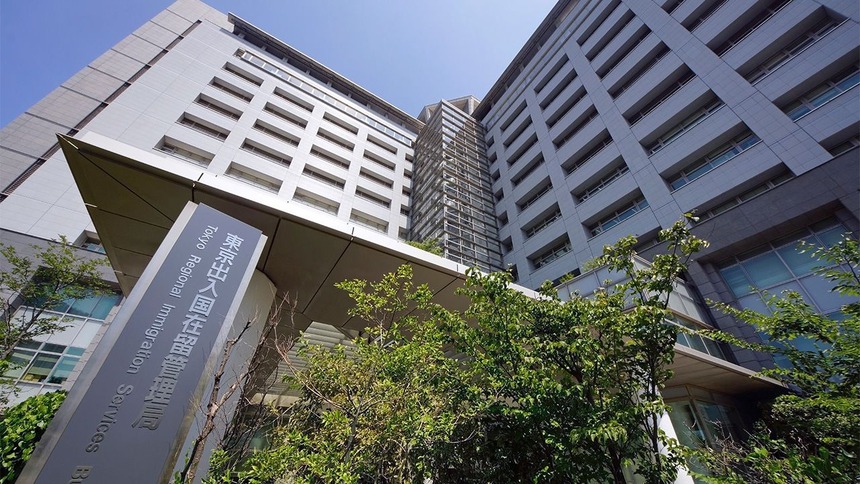
Japan’s Immigration Services Agency has released updated guidance on how applications for changes to residence status or extensions of stay are assessed under the Immigration Control and Refugee Recognition Act.
These assessments are conducted at the discretion of the Minister of Justice, who considers several factors before approving.
According to the Immigration Services Agency, a change or extension is only allowed when there are sufficient grounds. While certain factors are mandatory—such as eligibility for the requested status—others are considered during a comprehensive review of the applicant’s situation.
Basic Eligibility and Activity Requirements
Applicants must be engaged in activities that fall within the scope of the residence statuses listed in the Appended Tables of the Immigration Control Act. These include:


Work, study, or family-related statuses, among others
In addition, applicants must meet the “landing permission criteria” typically used during entry examinations, especially those applying under “Designated Activities” or “Long-Term Resident” categories.
For example, those who no longer meet certain criteria—such as age or dependent status—due to changing circumstances may still be considered if other conditions are met.
Consistency of Residence Activities and Conduct
Details inform that foreign nationals are required to engage in activities consistent with their current status of residence. Situations such as a student continuing to live in Japan after withdrawing from school or an intern who goes missing may be seen negatively unless a valid reason is presented.
Time spent outside Japan for extended periods, even with a re-entry permit, may also be viewed as inconsistent with residence activities if not properly justified.
Applicants must also show good conduct. Criminal penalties, involvement in activities like illegal employment, or violations of immigration laws can be considered as negative factors.
Financial Stability, Employment Conditions, and Tax Compliance
Applicants must also demonstrate the ability to support themselves financially, either through personal assets or employment. This assessment can be made at the household level. While reliance on public assistance may negatively impact decisions, humanitarian factors may also be considered.
For those working or intending to work, their employment conditions must comply with Japanese labour laws. Violations of labour law by employers are taken into account, but if the applicant is not at fault, this is considered in the final decision.
Tax compliance is also reviewed. Unpaid taxes, especially if considered deliberate or ongoing, can be grounds for denial. This includes non-payment of income tax or social insurance premiums.
Fulfillment of Legal Obligations and Documentation
Medium to long-term residents must fulfill all obligations under the Immigration Control Act, including notification of changes to their residence card details, applying for re-issuance or renewal of cards, and updating their affiliation information.
As of December 2nd, 2024, the issuance of physical health insurance cards was discontinued. Applicants must now present their health insurance status using the “My Number” portal or official documents. Failure to do so will not automatically result in the denial of permission for a status change or extension.
The Ministry of Justice retains full discretion in granting approvals, considering all circumstances related to the application.