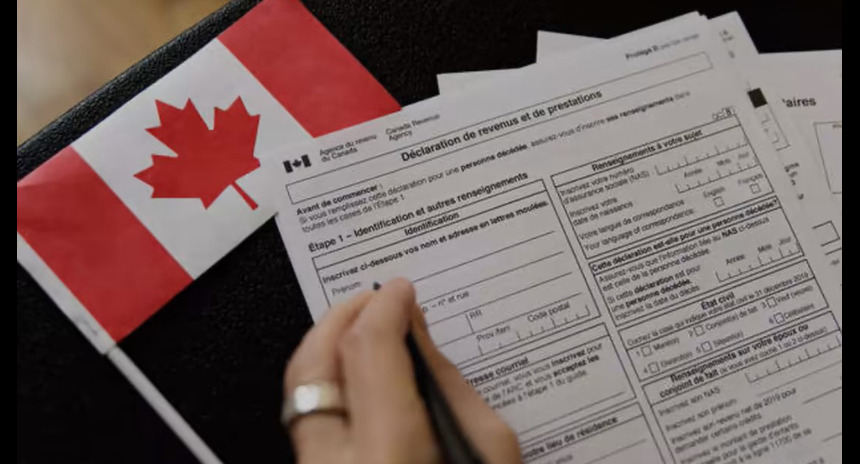
Canada’s study permit refusal rate reached new heights in 2024, with nearly 290,000 applications denied. The top five reasons for these refusals, as outlined by Immigration, Refugees and Citizenship Canada (IRCC), reveal key issues applicants must address to improve their chances of approval.
These, according to Immigration News Canada, include concerns over applicants’ intent to leave Canada, financial readiness, and the authenticity of submitted documents.
As the national approval rate sank to 48%—down from 60% in previous years—the refusal reasons reveal the increasingly stringent review process for international students.
Between January and July 2025, 62% of study permit applications were refused. The following are the top five reasons for refusals in 2024, according to the latest available data.
1. Perceived Immigration Intent: 76% of Refusals


The most common reason for study permit refusals in 2024 was that applicants were seen as unlikely to leave Canada after their studies. Cited in 76% of refusals, this concern arises from applicants’ travel history and perceived ties to their home country.
IRCC officers assess whether applicants have enough reason to return home, such as family, employment, or property ties. Weak or inconsistent travel history also raises doubts about an applicant’s intent.
To address this, applicants can focus on strengthening their statement of purpose (SOP) by clearly explaining how their education in Canada ties to their career goals in their home country. Including supporting documents, such as proof of family relationships or future job opportunities, can also help mitigate this concern.
2. Insufficient Financial Resources: 53% of Refusals
The second most common refusal reason, affecting 53.3% of applicants, was concerns about financial readiness. In 2024, IRCC required applicants to show they could cover tuition, living expenses, and travel without relying on Canadian work. This financial requirement increased significantly, from CA$10,000 in 2023 to CA$20,635 for 2024.
Applicants can counter this by providing strong financial documentation, including at least six months of consistent bank statements and proof of sufficient funds through guaranteed investment certificates (GICs). Additionally, if relying on family or a sponsor, submitting their financial records can further solidify the applicant’s ability to support themselves.
3. Purpose of Stay Not Clear: 47% of Refusals
In 47.3% of refusals, applicants’ study programs were deemed inconsistent with their background or unclear in terms of their intent to stay temporarily. For example, applicants applying for programs unrelated to their prior education or career may face scrutiny.
To avoid this, applicants should tailor their Statement of Purpose (SOP) to clearly explain why their chosen program aligns with their career goals. Suppose there is a gap in education or a shift in career direction. In that case, applicants should provide a logical explanation to demonstrate the program’s relevance to their future in their home country.
4. Inadequate Tuition Payment Proof: 18.8% of Refusals
Nearly 19% of study permit refusals were linked to insufficient proof of funds to cover tuition fees. As tuition for international students rises, applicants must demonstrate their ability to cover at least the first year of their program costs.
Applicants are advised to include documentation such as tuition receipts, bank drafts, or proof of loans to demonstrate their ability to cover these costs. Additionally, any supplementary financial support from scholarships, grants, or family members should also be clearly documented.
5. Document Misrepresentation: 5% of Refusals
Document authenticity issues contributed to 5% of refusals in 2024. This includes submitting forged documents or failing to disclose relevant information, such as previous visa refusals. With IRCC’s increased use of technology to detect fraud, applicants must ensure their documents are accurate and truthful.
To avoid this issue, applicants are advised to verify that all documents are genuine and issued by recognised institutions. Any discrepancies or omissions should be explained clearly in the application to prevent accusations of misrepresentation.
IRCC’s New Transparency Measures
In response to the rising number of refusals, IRCC has also introduced new transparency measures, including detailed decision notes in refusal letters. This helps applicants understand why their applications were denied and what steps they can take to improve future submissions.
Applicants can use these notes to adjust their applications accordingly, making sure that key issues are addressed before reapplying.