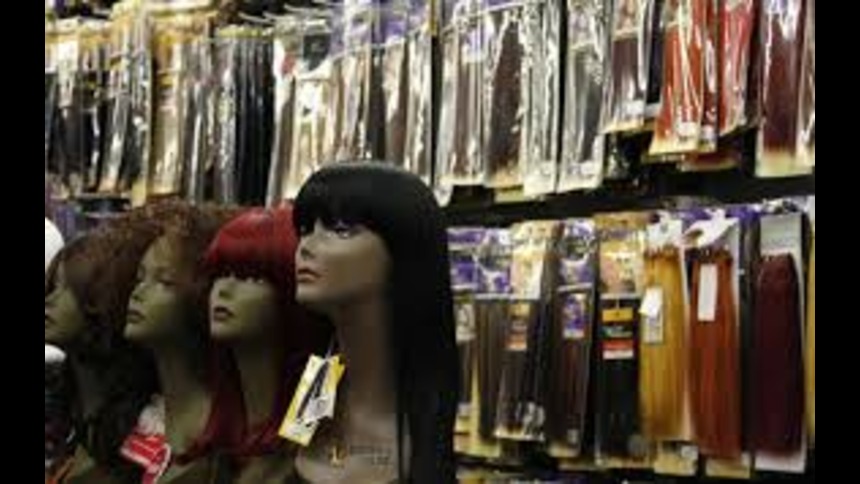
Nigeria, with its inflation-ridden economy, has seen the beauty industry to a near-unaffordable state. The beauty industry, especially hair styling, shows the changing economic situation for many women.
The days of ladies visiting salons and leaving with a gorgeous hairdo of N1000 are over; now hair care is a necessity influenced by financial limitations.
Mrs Joke, a stylist with over ten years of experience in Ago Palace Way, Lagos, notes the dramatic changes in her salon. “Women, especially students, aren’t getting their hair done like they used to,” she says.
The reasons are obvious: rising costs are making families cut back on salon visits.
A hairstyle that used to cost between N300 and N500 now starts at N1,000 for children. Because of the economic pressure, students are spacing out their hair appointments and choosing styles that last longer to save money.


Joke recounts that in the past, the salon was a busy space, particularly on weekends, with stylists working tirelessly through the day.
She recalled the days when clients filled every chair to the point where lunch breaks were a distant thought. Today, she finds herself reminding customers to visit, a stark contrast to the former bustling atmosphere.
Rising costs of supplies
The increase in prices extends beyond services; hair products have also seen staggering price hikes. The experienced hair stylist spoke of her recent purchase of hair care products.
A shampoo and conditioner combo that once cost N20,000 has ballooned to N50,000, marking a 150% increase. Ordinary shampoos have jumped from N800 to N2,000, while hair creams now average N4,000 instead of N800. Such increases strain not just the salon owners but also the customers who are left to shoulder these costs.
Price Comparisons:
– Shampoo:
- – Previous Price: N800
- – Current Price: N2,000
- – Percentage Increase: 150%
– Hair Cream:
- – Previous Price: N800
- – Current Price: N4,000
- – Percentage Increase: 400%
– Shea Butter:
- Previous Price: N2,500
- Current Price: N15,000
- Percentage Increase: 500%
She says that all these costs are driving up the prices for hair services. Even rent has gone up significantly. Joke remembers when she paid N12,000 for her shop, but now it’s N300,000.
A shift in hair choices
Mrs. Chinyere Chinedu, another stylist, echoed the sentiment of reduced clientele. “Things are no longer like the way it was before,” she said.
The changes in purchasing habits are evident; smaller attachments for hair extensions that were once N1,800 now cost N3,800 and more. The disparity in prices makes many reconsider their choices.
“Now, women prepare themselves before making their hair,” Mrs Chinedu explains. Services that used to be spontaneous are now planned out of financial necessity. Children’s hairstyles now cost no less than N2,000, further burdening families.
“I don’t use electricity all the time anymore. If I don’t need it, I turn off the meter. Sometimes customers ask why it’s dark, but they don’t realise that using electricity costs money. Now it’s pay-as-you-go, so I only use it when necessary.”
“I had to stop using the big fan because it uses too much power, so I switched to a smaller one. Customers complain, but I have to watch my bills.”
“Don’t even talk about rent,” Chinyere said, echoing Joke’s testimony, rents that used to be N150,000 are now averaging between N500,000 to N600,000 annually.
Such financial demands make it nearly impossible for new businesses to thrive, she lamented.
The New Normal: DIY Hair Care
Another stylist, Mrs Bella, with three years of experience in the business, shared a similar narrative of dwindling customer numbers, revealing that most women now opt for simpler hairstyles, often turning to wigs and weaves as budget-friendly alternatives.
“I can say that the last two years were better than this,” she explains, lamenting the plummeting customer numbers.
She also shared that hair product prices have skyrocketed in the past year alone. This, in turn, contributes to the increase in hair-making prices. And these prices have led many women to reevaluate their beauty budgets, with some even opting for low-cut hairstyles.
Customer Reflections
The changes in salon visits are not only about the stylists but also the customers who are increasingly feeling the weight of these economic challenges. Mr Innocent, a lawyer who has sisters, shared his view on some of the things observed.
“Whenever I ask ‘why is your hair looking like that?’, the response is often, ‘no money ooo’ or ‘I’m now carrying low cut because it’s cheaper,’” he said.
This shift towards more affordable hairstyles has led to a resurgence of natural looks. Women are experimenting with low cuts, vibrant colours, and creative hairstyles that celebrate their natural beauty. Highlighting a silver lining amidst the financial gloom.
Some are choosing to invest in wigs instead of visiting the salon. Ms Beauty, a middle-aged woman, shared that to get her hair done, she would need at least N12,000.
“I spoke with my stylist the other day, and she said I should budget between N12,000 and N14,000. That’s a lot!”
She mentioned that she rarely goes to the salon anymore and prefers wigs to look good, as she is currently focused on managing other priorities.
As the cost of beauty rises, so too does the creativity among women. Many are finding ways to express themselves without the need for expensive salon visits.
“Ladies are now carrying their hair with pride,” Ms Esther, a young lady, expressed.
“They dye their low cuts in bold colours, showcasing individuality without breaking the bank.”
This growing trend in Lagos shows a pattern where women are redefining beauty standards, moving away from salon dependency to embracing more personal styles. The emphasis on self-expression amidst economic constraints has led to a diverse representation of beauty in the community.
A call for change
The beauty industry in Lagos reflects the country’s wider economic struggles. As prices rise, both stylists and clients are adapting to a new reality shaped by financial constraints. The once-busy salons are now quieter, with a greater emphasis on affordability instead of luxury.
The resilience of women in adapting to these changes is commendable. While the current economic climate poses significant challenges, it has also fostered a creative response that celebrates individual beauty.