
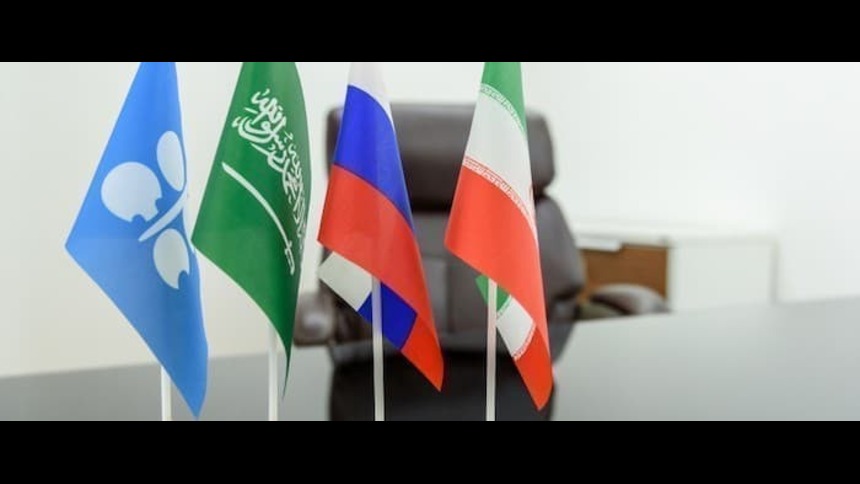
Crude oil prices took another hit over the weekend after OPEC+ announced a significant production increase for June.
During a virtual meeting on Saturday, the coalition, led by Saudi Arabia and Russia, agreed to raise output by 411,000 barrels per day (bpd), nearly three times the volume initially planned.
The decision follows a similar output surge for May, marking a clear departure from the group’s previous efforts to stabilise prices. Saudi Arabia, in particular, appears to be pursuing a lower price approach, targeting nations such as Kazakhstan and Iraq that have repeatedly breached their quotas. Kazakhstan, for instance, exceeded its March target by 422,000 bpd.
“OPEC+ has just thrown a bombshell to the oil market,” Jorge Leon of Rystad Energy told Bloomberg. “With this move, Saudi Arabia is seeking to punish lack of compliance and also ingratiate itself with President Trump.”
President Trump has been vocal about his desire for reduced oil prices. With global markets unsettled by new tariffs, OPEC+ seems to be supporting Washington’s efforts to curb inflation. Trump is due to visit the Middle East this month, raising speculation of deepening energy ties.


Crude oil prices were already under pressure, with Brent hovering around $61 per barrel on Friday, a four-year low. Following OPEC+’s announcement, prices fell a further 6%, amplifying market pessimism driven by trade tensions and weakening economic indicators.
In response, Goldman Sachs lowered its Brent oil forecast for December 2025 by $5 to $66 per barrel, and revised WTI to $62, citing increasing OPEC+ supply and Trump’s tariff-driven economic uncertainty. “We no longer provide a price range,” the bank stated, citing high volatility and elevated recession risks.
Standard Chartered echoed the downgrade, reducing its 2025 Brent projection by $16 to $61 per barrel and trimming its 2026 estimate to $78. The bank cautioned that the Trump administration’s aggressive trade policies are undermining market confidence, especially after a disappointing U.S. economic report this week.
JPMorgan increased the probability of a global recession this year to 60%, while S&P Global warned that oil demand growth could fall by as much as 500,000 bpd, compounding bearish pressures on the market.
Despite citing “ongoing strong market fundamentals” to justify the production increase, many observers interpret the move as a bid to assert dominance and enforce discipline within the group. Helima Croft, among others, believes Saudi Arabia is using the supply surge to re-establish control over quota violators, even if it means allowing prices to drop.
The output hike is being driven by eight core members: Saudi Arabia, Russia, Iraq, the UAE, Kuwait, Kazakhstan, Algeria, and Oman. The group plans to review the impact in June, but the message is unambiguous, OPEC+ is stepping back from defending high oil prices, and markets should brace for continued volatility.