
Nigeria’s electricity distribution companies (DisCos) faced a N44.27 billion revenue shortfall in October 2025, exposing persistent inefficiencies in billing and collection that continue to strain the nation’s power sector.
The data, published in the latest Nigerian Electricity Regulatory Commission (NERC) Commercial Performance Factsheet, underscores structural weaknesses threatening investment confidence and reliable electricity supply.
Billing efficiency shows wide disparities
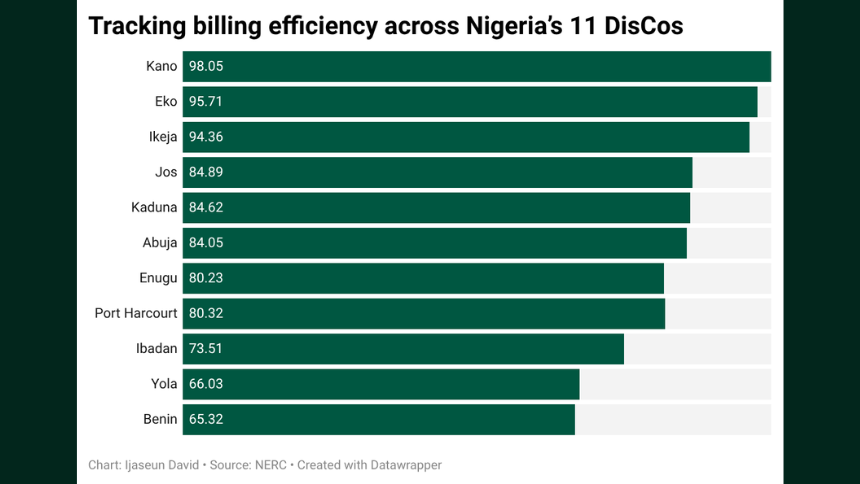
Across the 11 DisCos, billing efficiency averaged 83.9%, meaning nearly N48.66 billion worth of electricity was delivered but never billed. Kano DisCo led the pack with 98.05% efficiency, followed by Eko (95.71%) and Ikeja (94.36%). In contrast, Benin DisCo posted the lowest performance at 65.32%, highlighting uneven operational capacity nationwide.
Revenue collection falls short
Revenue collection performance was similarly concerning. Of the N255.19 billion billed, only N210.92 billion was collected, creating a significant N44.27 billion revenue gap. These shortfalls ripple through the value chain, reducing payments to Nigerian Bulk Electricity Trading Company (NBET) and generation companies (GenCos), deepening liquidity pressures across the sector.
Regulatory Measures and Challenges


NERC has consistently emphasized that improving billing and collection efficiency, expanding metering coverage, and reducing aggregate technical, commercial and collection (ATC&C) losses are critical. The National Mass Metering Programme (NMMP) has increased national metering to 56.07%, yet the latest figures reveal that deeper reforms and stricter enforcement are needed to stabilize the sector.
Why It Matters for Consumers and Investors
Failure to address these inefficiencies affects everyday consumers through inconsistent electricity supply and deters private investment. Experts warn that without substantial improvements, the sector will remain reliant on government subsidies while struggling to meet Nigeria’s growing electricity demand.
Read also: Nigeria electricity market: What NERC’s Q3 2025 payment data reveals