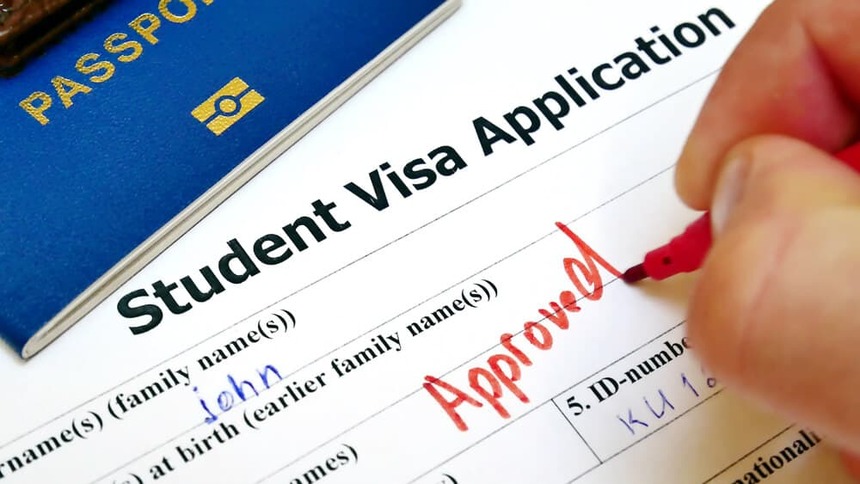
Governments around the world have increased student visa fees in 2025, adding significant financial pressure on international students.
Many top study-abroad destinations, including Australia, the UK, and Germany, have either raised visa charges or introduced new financial requirements that go beyond application costs.
Student visa fees now account for a growing share of pre-departure expenses, with several countries also mandating health insurance, blocked bank deposits, and processing surcharges.
Higher Visa Charges for Top Study Destinations
Australia has implemented the most notable increase, raising its base student visa fee to AUD 2,000 in 2025. This fee applies to most international applicants, though TravelBiz informs that students from Pacific Island nations and Timor-Leste are charged less. In addition, the Overseas Student Health Cover (OSHC) remains mandatory.


In contrast, the United Kingdom continues to charge a flat £524 student visa fee. However, international students must also pay the Immigration Health Surcharge, set at around £470 per year depending on the course length. The total processing time ranges from 3 to 8 weeks based on applicant location.
Canada maintains relatively low visa fees, with a CAD 150 charge for a standard study permit. A higher fee of CAD 389.75 applies if a student needs to restore their visa status after losing it. Reports cite that Canada’s transparent application system and post-study work options remain appealing to many international students.
New Zealand’s student visa fees in 2025 would depend on the type of visa and how you apply. For most online applications, the fee is NZD $330, but paper applications may cost more according to IDP Education. Many international students also need to pay a NZD $35 International Visitor Conservation and Tourism Levy (IVL). The main student visa, called the Fee Paying Student Visa, costs NZD $850. Another option, the Pathway Student Visa, costs NZD $750.
Visa Costs and Additional Financial Conditions
Germany keeps its visa fee low at €75, but the total financial commitment is higher. A blocked account with at least €11,904 is required to demonstrate financial capacity. TravelBiz informs that monthly withdrawals are capped at €992. Additional costs include APS certification, health insurance, and application paperwork.
The cost of a French student visa in 2025 is usually between €50 and €99. The exact amount depends on the student’s nationality and the type of visa. Students from countries that follow the “Etudes en France” (EEF) process often pay around €50, while others may pay up to €99.
Ireland maintains some of the lowest fees among major destinations. A single-entry student visa costs €60, while a multiple-entry visa is €100. Some categories, such as EU family members, are exempt. Additional processing fees may apply at specific visa centres.
Sweden charges SEK 1,500 for a student residence permit. Reduced fees are available for minors and scholarship holders. Applicants must also provide proof of admission and health insurance.
US, Singapore Retain Predictable or Digital-First Models
The United States continues to charge a $185 non-refundable fee for F and M student visas. This remains unchanged, and the fee applies to both academic and vocational students. J-visa applicants may be exempt if their program is US government-funded.
Singapore uses a fully digital and fast application process. The Student’s Pass issuance fee is SGD 60, with an optional SGD 30 charge for a multiple-entry visa. Applications go through Singpass or FileSG after biometric enrolment. Approved students receive an In-Principle Approval (IPA) letter that acts as an entry visa.
Additional costs such as mandatory health insurance, language proficiency tests (IELTS, TOEFL, Duolingo), and blocked bank accounts (notably in Germany) further increase the total financial burden.
Students are advised to consult official immigration portals and embassy guidelines for accurate, up-to-date requirements before beginning their visa application process. Planning for additional fees—such as for university applications, biometrics, medical exams, and insurance—is essential to avoid last-minute complications.