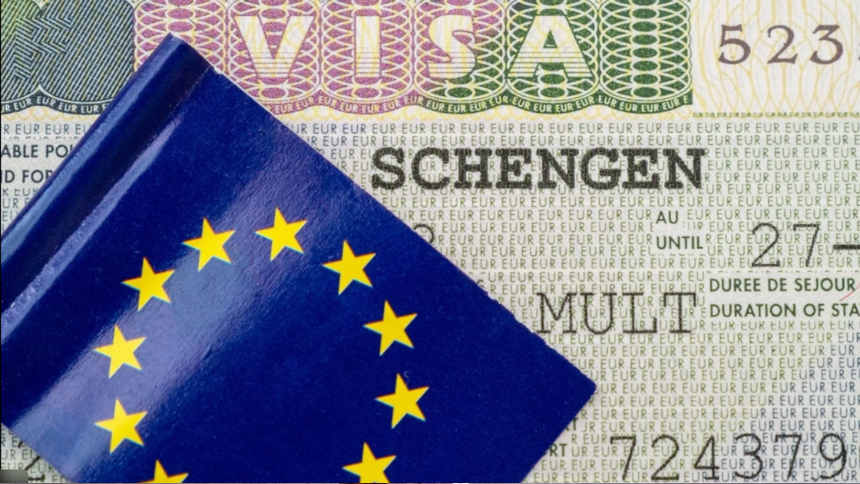
Non-EU nationals travelling to the Schengen area in 2026 for short stays of up to 90 days will be required to follow established Schengen visa rules, including where to apply, what documents to submit, how much the visa costs, and how long applications take to process, under regulations applied across participating European countries.
The information is issued by Schengen Migration and Home Affairs authorities, which oversee common visa rules for the Schengen area and provide guidance to travellers on short-stay entry requirements.
What a Schengen visa allows
A Schengen visa is “an entry permit for non-EU nationals to make a short, temporary visit of up to 90 days in any 180-day period to a country in the Schengen area,” according to Migration and Home Affairs guidance. The visa allows travel between Schengen countries during the authorised stay.


Three visa types are available. A single-entry visa permits one entry into the Schengen area. A multiple-entry visa allows several visits while the visa remains valid. An airport transit visa allows travellers to pass through the international transit area of a Schengen airport during a stopover or flight change but does not allow entry into the country.
Travellers can use the official short-stay calculator to determine how many days remain available under the 90-day rule.
Who must apply for a visa
Citizens of certain non-EU countries must apply for a Schengen visa before travelling. Visa requirements are based on nationality and are listed by the European Union for crossings at external borders.
Exceptions apply to some traveller categories, including diplomats, members of armed forces, refugees, and pupils on school trips. In addition, some non-EU nationals are required to obtain an airport transit visa when connecting through international transit areas of Schengen airports.
For certain nationalities, this requirement applies only in specific Schengen countries. Exemptions are provided for defined categories under the Visa Code.
Where and when applications are submitted
Visa applications must be lodged with the consulate of the Schengen country that is the main destination. If more than one country is included in the itinerary, the application must be submitted to the consulate of the country where the longest stay will take place. If stays are of equal length, the application should be made to the consulate of the first country entered.
As a general rule, applicants must apply in the country where they are legally resident. Applications must be submitted at least 15 days before travel and no earlier than six months in advance. Consulates may require applicants to book an appointment before submitting documents.
Documents, fees, and processing times
Applicants must submit a valid passport, a completed visa application form, and a photograph that meets ICAO standards. Medical insurance covering emergency care, hospitalisation, and repatriation is required.
Applicants must also provide documents showing the purpose of travel, accommodation arrangements, financial means, and intention to return to their home country. Fingerprints are collected at the time of application, with exemptions for specific categories.
The standard Schengen visa fee is €90 for adults and €45 for children aged six to 12. Reduced fees apply to applicants from Armenia, Azerbaijan, Belarus, and Cabo Verde. Applications are normally processed within 15 days, but this period may be extended to up to 45 days. If an application is refused, applicants are informed of the reason and the appeal procedure.
Read also: Top 10 Schengen Countries with the Highest Visa Approval Rates