
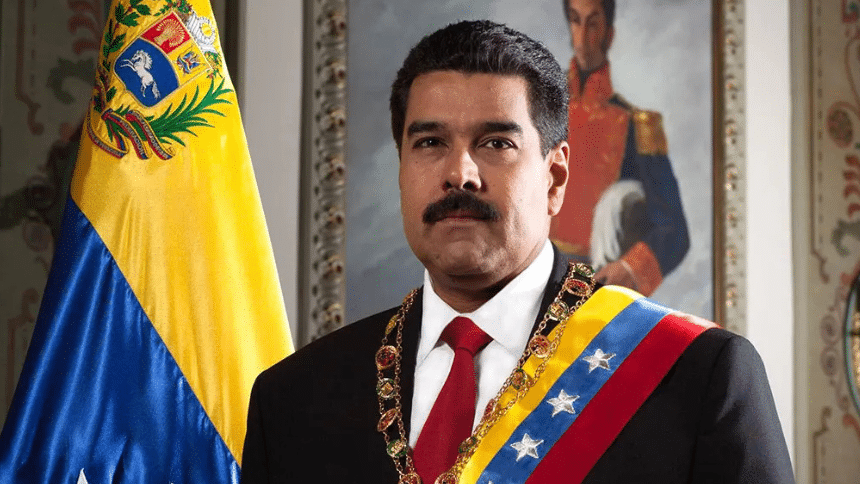
Venezuelan President Nicolás Maduro said he is ready to welcome US investment in the country’s oil sector, signalling a sharp shift in tone as export pressure grows and production slows under U.S. action.
Speaking in an interview aired late on New Year’s Day on Venezuelan state television, Maduro said Venezuela would accept U.S. oil investments under terms similar to those granted to Chevron.
“If they want Venezuela’s oil, Venezuela is ready to accept U.S. investments,” Maduro said, according to Reuters. “When, where and how they want to make them.”
The comments come as Venezuela faces rising economic strain following a U.S. naval blockade ordered in early December by President Donald Trump. The move aims to stop sanctioned tankers from shipping Venezuelan oil and fuel.
The blockade has disrupted exports, forced tankers to reroute, and delayed shipments. It has also reduced government revenue and increased pressure on storage capacity, industry sources say.


Venezuela holds the world’s largest proven oil reserves, but years of underinvestment, sanctions, and operational failures have sharply reduced output. Much of its production comes from extra-heavy crude in the Orinoco Belt, which is costly to extract and carbon-intensive.
State oil company PDVSA has begun shutting down producing wells in the Orinoco region, according to people familiar with the plans. The move follows a decision taken on December 23 as storage tanks filled and shipments stalled.
PDVSA handles most of Venezuela’s crude exports, with China as its main buyer. The blockade has made it harder to move oil, adding to logistical and financial stress.
Maduro said Caracas is open to “serious talks” with Washington, including cooperation on drug trafficking.
“We must start to speak seriously, with the facts in hand,” he said. “If they want to speak seriously about the agreement to battle drug trafficking, we are ready.”
He also struck a conciliatory tone toward Americans, calling Venezuela “a brother country” and “a friendly government.”
U.S.-Venezuela relations remain tense. President Trump said earlier this week that the United States struck a coastal dock allegedly used by drug boats. Washington has long accused Caracas of failing to combat drug trafficking, an allegation Venezuela denies.
The renewed openness to U.S. oil investment comes at a time when global energy markets are under pressure to decarbonize. Heavy crude like Venezuela’s produces higher emissions than lighter grades, raising questions about its long-term role in a low-carbon world.
Analysts say any return of large-scale U.S. investment would likely come with strict conditions, including environmental controls, transparency, and limits tied to sanctions policy.
For Venezuela, foreign investment could stabilize production, reduce flaring, and improve efficiency. For the United States, it could offer leverage over supply while shaping how high-emission oil is produced during the energy transition.
Whether talks will lead to concrete deals remains unclear. For now, Maduro’s remarks mark one of his clearest signals yet that Venezuela is willing to trade access to its oil for economic relief and renewed engagement with Washington.
Read also Seven things to know as the US seizes Venezuelan oil tanker