
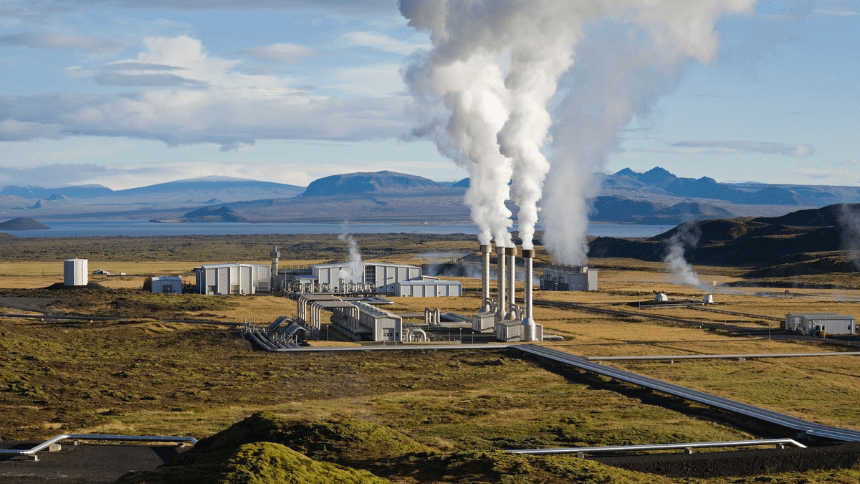
Geothermal energy is emerging as a rare area of bipartisan calm in the U.S. energy debate, drawing federal backing even as other renewables face political resistance under President Donald Trump.
Unlike wind and solar, geothermal power has not been targeted by the administration. Instead, it is gaining policy support, faster permits, and rising private investment, positioning it as a quiet winner in the US clean energy shift.
Geothermal energy uses heat stored deep in the Earth to generate electricity or provide heating and cooling. Wells drilled into hot rock bring heat to the surface. According to the European Commission, the energy can be used for power generation, district heating, water systems, and industrial use. Unlike wind or solar, geothermal runs day and night and does not depend on weather.
In May, the U.S. Department of the Interior said it would use emergency permitting rules to speed up geothermal projects on federal land. The move cuts approval times from months or years to a maximum of 28 days. Three fast-tracked projects in Nevada are operated by Ormat, a geothermal firm that also received federal support during Trump’s first term.
“Geothermal energy is a reliable energy source that can power critical infrastructure and strengthen national security,” Interior Secretary Doug Burgum said. He added that the policy supports energy independence and American jobs.


Private capital is also flowing into the sector. In December, Fervo Energy raised $462 million in a Series E funding round. The company is building Cape Station in Utah, which is expected to supply 100 megawatts of power to the grid from 2026. Output is planned to rise to 500 megawatts by 2028.
“With rising demand from AI and electrification, the grid needs power that is always on,” said Jeff Johnson, a general partner at B Capital. “Enhanced geothermal energy is well placed to deliver that.”
Cities and institutions are adopting geothermal systems for heating and cooling. In New Haven, Connecticut, construction has begun on a geothermal network serving Union Station and a new public housing project of about 1,000 homes. City officials say the project will cut emissions and improve public health.
“You get one of the most efficient heating and cooling systems available,” said Steven Winter, New Haven’s executive director of climate and sustainability.
Universities are also moving. Yale University has started building a geothermal loop for several science buildings. A new state energy law offering grants and loans is expected to accelerate similar projects.
Massachusetts is further ahead. In Framingham, the first utility-owned geothermal network in the U.S. went live in 2024. In December, the non-profit HEET received an $8.6 million grant from the U.S. Department of Energy to expand the system, which already serves about 140 customers.
Federal support and local adoption suggest geothermal could play a growing role in U.S. decarbonisation, even under a fossil-friendly administration.
Read also: Trump unveils $1m fast-track visa programme offering route to US residency, citizenship