
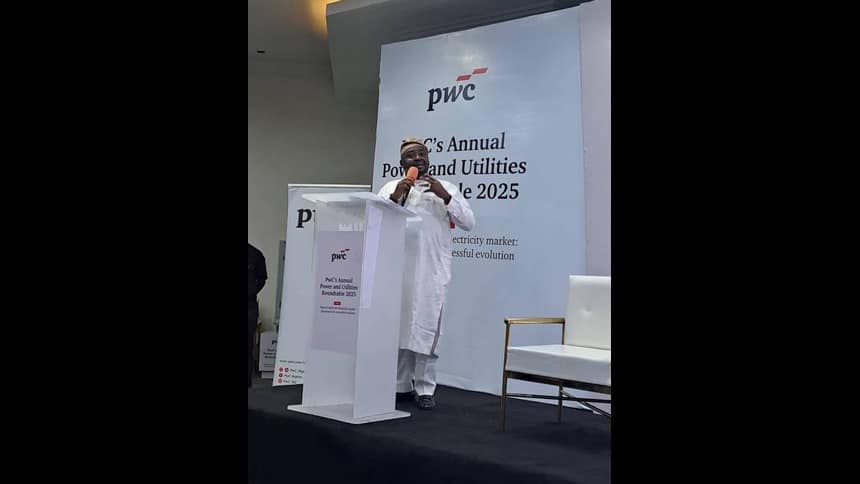
Nigeria has attracted over $2 billion in fresh power sector investments, driven by sweeping reforms under the Electricity Act 2023, Adebayo Adelabu, Minister of Power, revealed.
The new investments signal strengthening investor confidence in the Federal Government’s strategy to decentralise and liberalise the electricity market.
Adelabu made the disclosure on Thursday while delivering the keynote address at PwC’s Annual Power and Utilities Roundtable 2025 in Lagos, themed “Nigeria’s Multi-Tier Electricity Market: Imperatives for Successful Evolution.”
Reforms driving investor confidence
According to the Minister, the transition from a single, centralised electricity market to a multi-tier, state-driven model is reshaping Nigeria’s investment landscape.
He said the Electricity Act 2023 has opened new opportunities for private capital by empowering states to generate, transmit and distribute power within their jurisdictions.


“These interventions are already showing results. Under President Tinubu’s leadership, the sector has recorded major milestones, including attracting over $2 billion in fresh investments,” Adelabu said.
He highlighted states such as Lagos and Enugu as early examples of subnational markets leveraging the reforms to stimulate new projects and partnerships.
Major milestones boosting power sector stability
One of the standout achievements, the Minister noted, is the first-ever successful synchronisation of Nigeria’s power grid with the West African Power Pool (WAPP).
The four-hour synchronisation linked Nigeria with 14 West African countries, advancing plans for a fully integrated regional electricity market.
Adelabu described the feat as a “remarkable milestone” that strengthens Nigeria’s regional energy footprint and enhances prospects for cross-border electricity trade.
The Minister also revealed:
- 70% growth in power sector revenue in 2024
- ₦700 billion reduction in government subsidy liabilities
- A rise in installed generation capacity from 13GW to 14GW
- Nigeria’s highest-ever generation peak of 5,801.44MW on March 4, 2025
These improvements, he said, are helping stabilise the grid, improve liquidity and strengthen investor interest.
Metering programme receives massive funding
To close Nigeria’s metering gap, Adelabu announced that the Federal Government has secured:
- ₦700 billion from FAAC for the Presidential Metering Initiative (PMI)
- $500 million from the World Bank’s DISREP programme
“Procurement of the meters has commenced,” he confirmed, adding that the combined funding will deliver millions of prepaid meters nationwide.
Policy wins accelerating investment inflows
Adelabu listed additional reforms contributing to the new investment wave:
- Activation of 15 state-led electricity markets
- Development of a National Integrated Electricity Policy for the first time in 24 years
- Expansion of public-private partnerships across transmission, distribution and metering
He emphasised that Nigeria’s new electricity framework enhances transparency, reduces market risk and gives investors clearer long-term visibility.
Challenges remain—but reforms continue
The Minister acknowledged persistent issues such as regulatory overlaps, infrastructure bottlenecks and liquidity constraints. However, he said the Ministry is tackling these through coordinated regulation, capacity building, and continuous engagement with private sector partners.
In his closing remarks, Adelabu urged sector players, investors, and state governments to support the ongoing transition.
“Nigeria’s move to a multi-tier electricity market is not optional; it is necessary,” he said. “We must think boldly and work collaboratively to build a competitive, decentralised and investment-ready power sector.”