
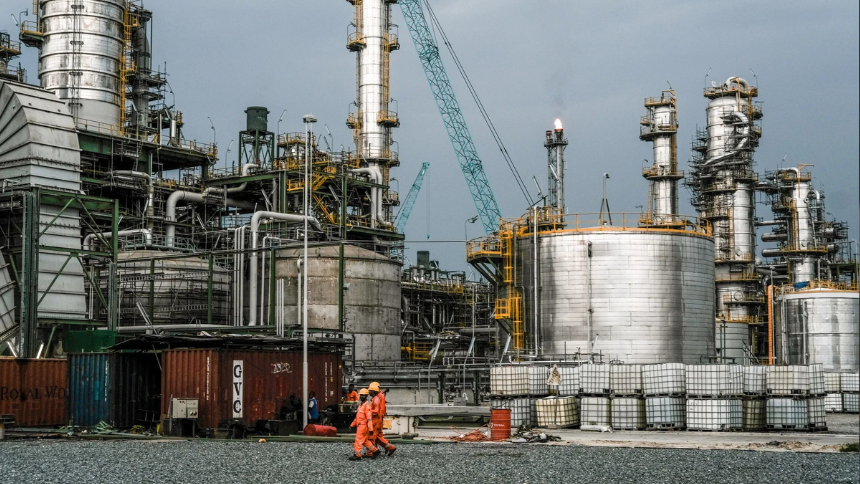
Nigerians face renewed questions about energy security after a brief strike by oil workers at Dangote Refinery cut the country’s daily oil output by 16% and slashed gas supplies.
The walkout, led by the Petroleum and Natural Gas Senior Staff Association of Nigeria (PENGASSAN), began on Sept. 28 after Africa’s largest refinery, Dangote, dismissed more than 800 unionised staff. The strike ended on Wednesday following government-mediated talks.
The shutdown removed about 283,000 barrels of crude oil per day from the market, equal to 16% of Nigeria’s production, an impact report showed. Gas output also fell by 1.7 billion standard cubic feet per day, stalling over 1,200 megawatts of electricity, according to the state-owned Nigerian National Petroleum Company (NNPC).
“This posed a material threat to national energy security,” the NNPC said in its internal report. It warned the disruption could have deepened if the stoppage had lasted longer.
Critical facilities, including the Shell-operated Bonga floating production unit and the Oben gas plant, were shut down. Delays also hit Nigeria LNG’s Train 5 and 6 restart projects, while midstream networks and export terminals such as Akpo, Brass, and Egina faced backlogs.


Cargo loadings for the Dangote refinery itself were held up, risking demurrage costs. At least five critical maintenance and project timelines slipped during the stoppage, the report showed.
NNPC said it activated continuity plans and deployed non-union staff to sustain operations. But it admitted the strike caused “significant revenue losses” from missed crude liftings and gas sales.
PENGASSAN suspended the strike after talks brokered by the government and the Dangote refinery management. While immediate supply risks have eased, analysts said the dispute highlights deep vulnerabilities.
Read also: PENGASSAN suspends strike against Dangote Refinery