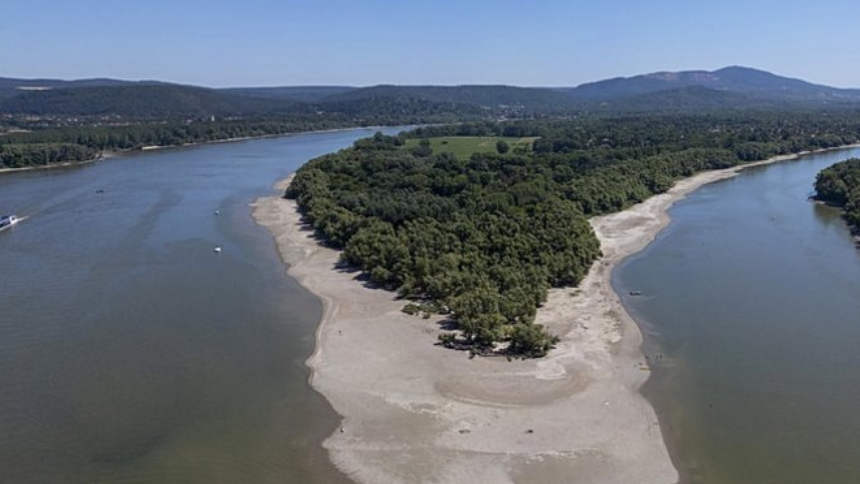
In a summer shadowed by crisis, two of Europe’s most important rivers, the Rhine in Germany and the Danube in Hungary have shrunk to record lows, disrupting commercial shipping and threatening the continent’s climate and development ambitions.
Despite brief showers in recent days, water levels on both rivers remain too shallow for most cargo vessels to sail fully loaded. In Germany, some ships now carry just half their typical cargo. In Hungary, vessels are restricted to 30–40% of their capacity. For companies already navigating fragile supply chains, this spells disaster.
But it’s not just economics at stake. These low water levels are part of a larger pattern of climate disruption that now stretches from rivers to global diplomacy, and even the UN’s flagship climate finance conference in Spain couldn’t escape the heat.
Trade in troubled waters: Europe’s shipping arteries in peril
The Rhine and the Danube are vital to Europe’s commercial heart. The Rhine connects industrial Germany to the North Sea, carrying oil, coal, grains, and chemicals. The Danube snakes through ten countries, feeding trade across Eastern Europe and the Balkans.
Yet, in June 2025, both rivers are running dangerously low, cargo traffic has slowed dramatically, leading to a surge in the cost of transport. In Germany, water levels at the Kaub chokepoint on the Rhine fell so low this week that cargo ships could no longer pass with more than 50% capacity, even after brief rainfall. In Hungary, the situation is worse.


“Ships on the Danube are operating at just 30–40% capacity,” said Attila Bencsik, deputy president of the Hungarian Shipping Association. “When we reduce the load, we lose time, money, and reliability. Rates can jump by 100%.”
The Hungarian Meteorological Institute confirmed June 2025 was the driest June since 1901, with rainfall reaching only 17% of the monthly average. Peak temperatures in Budapest hit 35°C (95°F), turning Europe’s second-longest river into a fragile trickle in many regions.
“Normally, these levels happen in August,” said Attila Szegi, deputy spokesman for Hungary’s Water Directorate. “But this year, we’re seeing August conditions in June. That’s climate change, loud and clear.”
Development goals drowned by inaction
While Europe’s rivers evaporated under the heat, leaders gathered in Seville, Spain, for the UN’s once-a-decade Financing for Development Conference. But despite the urgent backdrop, the meeting fell short of expectations.
Only one G7 leader, France’s Emmanuel Macron, attended. Scores of empty chairs filled the venue. Climate champions like Barbados PM Mia Mottley and South Africa’s Cyril Ramaphosa skipped the event altogether.
“We expected 70 heads of state. Fewer than 50 showed,” admitted one organizer. “The message is loud: development is no longer the priority for many governments.”
UN Assistant Secretary-General Marcos Neto said fears over U.S. absence nearly derailed negotiations. “Everyone was afraid the U.S. would torpedo the outcome,” Neto said. “But we reached a deal. Still, climate doesn’t wait.”
Instead of bold pledges, the final document merely reaffirmed existing commitments, with a few technical steps like the Seville Platform, aiming to help mobilise both public and private funds.
What it all means: A wake-up call
These twin crises, drying rivers and climate diplomacy gridlock, are intimately linked. Europe’s water crisis is not a one-off anomaly. It is a symptom of accelerating climate instability and also a warning that inaction will cost more than action.
When major trade arteries stall, food and energy insecurity rise, and when heatwaves cancel summits or sap participation, it weakens the very systems meant to fight the crisis. Hence, this moment demands more than concern. It requires coordinated global adaptation, from infrastructure investments to new financing models that don’t dry up when the rivers do.
“The water may rise again,” said Bencsik. “But if we don’t act now, the next drought won’t just disrupt trade. It’ll dismantle trust in the system itself.”
Read more on Trump Urges IEA To Prioritise Fossil Fuels Over Renewable Energy