
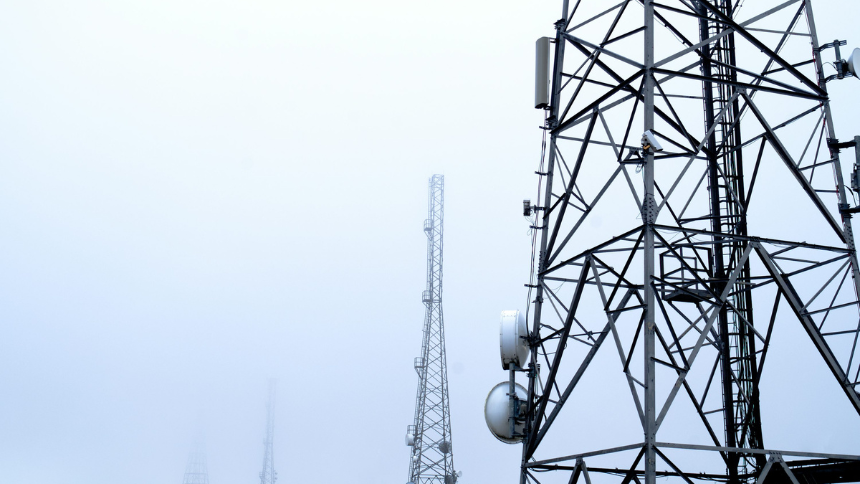
Nigeria’s telecommunications industry is losing over $350 million annually to diesel expenses as it struggles to maintain connectivity amid the country’s fragile power infrastructure, a new report has revealed.
According to the State of Africa’s Infrastructure Report 2025, published by the Africa Finance Corporation (AFC), telecom operators across Nigeria consume over 40 million litres of diesel monthly to keep base stations running. The expense, largely unavoidable due to an erratic electricity supply, places enormous pressure on operators, especially in rural regions.
“A growing number of tower sites going off-grid or relying on diesel generators is a cause of concern,” the report stated. “This raises capital and operational expenditure, making rural investments less viable. Energy costs for rural mobile base stations are estimated to be 37% higher than urban sites.”
Diesel dependence threatens digital access in Nigeria
Despite efforts to improve digital inclusion, energy inefficiencies continue to widen the broadband gap in Nigeria. Many sites still run on 3G technology, which is significantly more energy-intensive. The report highlights that in Africa, powering data traffic consumes 0.24 kWh/GB, compared to a global average of 0.17 kWh/GB.
Frequent theft of batteries and diesel further complicates the challenge. “Generators and batteries at tower sites are frequent targets for theft, leading to service disruptions and higher replacement costs,” the report added.


Telecom operators have increasingly turned to off-grid power generation in response to these issues. However, this shift only underscores the urgent need for a more stable national power grid and the adoption of alternative energy sources.
Nigeria plans major fibre network expansion amid rising connectivity costs
While Nigeria leads the continent in digital infrastructure development, it still faces significant investment gaps. The AFC report estimates that $7 billion annually is required to close Africa’s data infrastructure gap. Nigeria is addressing this with a public-private partnership (PPP) aimed at expanding its backbone fibre network from 35,000km to 125,000km.
“Nigeria’s PPP model aims to deliver a more modern and efficient fibre backbone to support advanced broadband technologies,” the report noted. However, despite these efforts, the last-mile connectivity challenge persists, particularly in underserved rural areas.
Without affordable and sustainable energy solutions, broadband expansion risks becoming financially unsustainable. The digital divide may widen if operators continue to bear the brunt of rising energy costs, leaving rural communities further disconnected.
Read more on OPEC+ raises output by 411,000 barrels daily, sparking fresh worries for Nigeria’s Naira